The information on this website is general in nature and does not take into account your objectives, financial situation, or needs. Consider seeking personal advice from a licensed adviser before acting on any information.
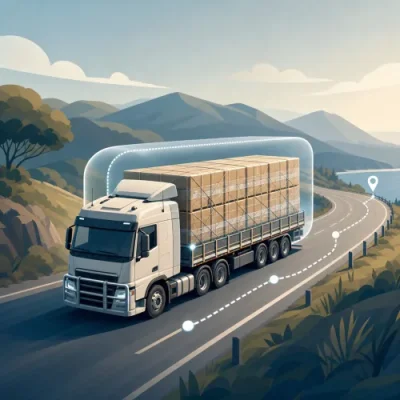
Goods in transit and cargo cover can help transport operators manage the risk of customer goods being lost, stolen or damaged while being carried. This guide explains how cargo cover differs from truck insurance, where carrier liability fits, and what Australian operators should check before choosing cover.
For many Australian transport operators, the truck is only one part of the risk. The goods on board may belong to customers, suppliers or freight forwarders, and a damaged or missing load can quickly create commercial, contractual and reputational problems.
Goods in transit insurance, cargo cover for trucks and carrier liability insurance are all terms used in the transport insurance market, but they do not always mean the same thing. Understanding the difference can help owner-drivers, fleet operators and freight businesses ask better questions when arranging truck insurance in Australia.
This article provides general information only. The right cover, limits, exclusions and pricing depend on your operations, contracts, freight type, routes, claims history and insurer criteria.
What is goods in transit insurance?
Goods in transit insurance is designed to respond when goods being transported are lost, stolen or damaged during a journey. It may apply while freight is being carried by truck, loaded or unloaded, temporarily stored during transit, or transferred between vehicles, depending on the policy wording.
For truck operators, goods in transit cover is often considered when the business carries property owned by someone else. Examples may include packaged consumer goods, machinery, construction materials, refrigerated goods, agricultural products, retail stock or specialist equipment.
The policy may be arranged by the freight owner, the carrier, a freight forwarder or another party in the transport chain. This makes it important to confirm who is responsible for arranging insurance and who bears the risk if something goes wrong.
How cargo cover for trucks differs from truck insurance
Standard truck insurance generally focuses on the vehicle and certain liabilities connected with operating it. Cargo cover focuses on the goods being carried. A comprehensive truck policy may protect the truck itself against insured events such as collision, theft, fire or malicious damage, but that does not automatically mean the freight on board is insured.
| Cover type |
What it generally relates to |
Why it matters |
| Truck insurance |
The insured truck, trailer or fleet, and sometimes third-party property damage or other vehicle-related liabilities. |
Helps protect the transport asset and vehicle-related financial exposure. |
| Goods in transit or cargo cover |
Goods, freight or cargo being transported, subject to policy limits, conditions and exclusions. |
Helps manage exposure if customer goods are damaged, stolen or lost while in transit. |
| Carrier liability insurance |
The carrier's legal or contractual liability for loss of or damage to goods. |
May respond where the carrier is liable, rather than simply because goods were damaged. |
The distinction is important because a truck can be insured while the load is not, or the load can be insured only in limited circumstances. A rollover, fire, theft, refrigeration failure or water ingress event may raise questions under both the vehicle policy and the cargo-related policy.
Carrier liability insurance versus goods in transit cover
Carrier liability insurance and goods in transit insurance are sometimes discussed together, but they can work differently.
Goods in transit cover may be structured to insure goods against specified risks while they are being transported. Depending on the wording, it may be closer to cargo property cover.
Carrier liability insurance generally relates to the carrier's liability for goods. This may depend on whether the carrier is legally or contractually responsible for the loss or damage. If the carrier is not liable under the relevant contract or law, the policy may not respond in the same way as cargo property cover.
Transport contracts, consignment terms, limitation of liability clauses and customer requirements can all affect how responsibility is allocated. Because these arrangements can be complex, many operators discuss them with insurance advisers, transport lawyers or specialist truck insurance brokers before committing to freight contracts or policy limits.
Common risks goods in transit cover may address
Cargo-related claims can arise from many practical transport risks. Depending on the policy, cover may be relevant for events such as:
- collision, rollover or vehicle fire damaging the load;
- theft of goods from the truck, trailer, depot or temporary stopping point;
- water damage caused by weather, leaks or flood-related events;
- impact damage during loading, unloading or handling;
- loss of freight after an accident or security incident;
- temperature-related damage for refrigerated or temperature-controlled goods, if specifically covered;
- damage to high-value, fragile, oversized or specialist cargo, where the policy is arranged for that risk.
Not every policy covers every type of loss. Some policies are written for specific goods, routes, vehicles, industries or contract types. Others may require extensions for risks such as refrigerated goods, dangerous goods, livestock, machinery, abnormal loads or goods carried on open trailers.
Policy limits, declared values and underinsurance
One of the most important decisions is the limit of cover. Cargo values can vary significantly between jobs. A truck carrying low-value bulk materials may present a very different exposure from one carrying electronics, medical supplies, chilled food, industrial machinery or multiple customers' consignments.
When considering policy limits, transport operators may need to think about:
- the maximum value of goods carried on any one vehicle;
- the maximum value at any one location, depot or temporary storage point;
- whether multiple consignments from different customers are carried together;
- peak-season cargo values;
- whether trailers, subcontractors or additional vehicles change the exposure;
- whether customer contracts require a minimum cargo insurance limit;
- whether the policy applies per load, per vehicle, per event or in another way.
Underestimating cargo values can create problems at claim time. Overestimating may increase premiums unnecessarily. Insurers and brokers may ask for details of the freight profile, not just the truck type, when assessing transport insurance.
Exclusions and conditions to check carefully
Goods in transit policies can contain detailed exclusions and conditions. These are not minor details: they may decide whether a claim is accepted, reduced or declined.
Common areas to check include:
- Packing and securing: policies may exclude losses caused by inadequate packaging, poor load restraint or unsuitable securing methods.
- Unattended vehicles: theft cover may depend on where the truck was parked, whether it was locked, and whether security requirements were met.
- Refrigeration or temperature control: spoilage may only be covered if the refrigeration equipment is insured, maintained and monitored in line with policy conditions.
- Inherent vice or nature of goods: some goods deteriorate, leak, rust, perish or break due to their own characteristics, which may not be covered.
- Delay and consequential loss: late delivery, loss of market, penalties or customer downtime may be excluded unless a specific extension applies.
- High-risk goods: alcohol, tobacco, pharmaceuticals, electronics, cash-like items, dangerous goods or valuable cargo may need disclosure or special terms.
- Loading and unloading: cover may differ depending on who was handling the goods and where the incident occurred.
- Subcontracting: using subcontractors may require disclosure and may affect who is insured.
Policy wording matters. Two policies described as "truck cargo insurance" can respond differently to the same event.
How freight type affects cargo cover
The type of freight being carried is central to how insurers assess cargo risk. It can affect whether cover is available, what conditions apply, and how premiums are calculated.
For example, refrigerated goods may require attention to refrigeration units, temperature records and spoilage extensions. Flatbed loads may raise questions about restraint, weather exposure and theft prevention. Fragile goods may depend heavily on packaging and handling procedures. Bulk commodities may have different contamination, spillage or weight risks.
This is why load type is often discussed alongside vehicle type, routes, driver experience and claims history. For a broader explanation of terms commonly used in policies, see our guide to insurance terminology for truck owner-operators.
What documents help with a cargo claim?
Clear documentation can make a significant difference when a cargo claim is assessed. Operators should keep records that show what was carried, its condition, who handled it and what happened.
Useful documents may include:
- consignment notes, manifests and delivery dockets;
- invoices or other evidence of cargo value;
- customer instructions and freight contracts;
- photos of the goods before loading and after the incident;
- load restraint records or checklists;
- driver incident reports;
- police reports for theft, vandalism or road incidents where relevant;
- temperature logs for refrigerated or controlled goods;
- repair, salvage or disposal records;
- communications with the customer, receiver, insurer or broker.
Operators should notify their insurer or broker as soon as reasonably practicable after a potential claim and follow the policy's instructions. Disposal, salvage, repair or replacement of goods before the insurer has had an opportunity to assess them may create issues, depending on the circumstances and policy conditions.
Questions to ask before arranging goods in transit cover
Before choosing cargo cover for trucks, it can help to prepare a practical summary of your operations. The more clearly you can describe the risk, the easier it may be to compare policy features.
Questions to consider include:
- What goods do we carry most often, and what goods do we avoid?
- What is the highest value we carry on one truck or trailer?
- Do we carry mixed loads for multiple customers?
- Do customer contracts require cargo insurance or carrier liability cover?
- Are goods ever stored overnight, cross-docked or held at depots?
- Do we use subcontractors, and are they covered?
- Are goods carried in enclosed trucks, refrigerated vehicles, tankers, tippers, flatbeds or trailers?
- What security, tracking, temperature monitoring and load restraint systems are used?
- Which exclusions would create the biggest problem for our business?
- How would a cargo claim interact with our truck, trailer, public liability or business interruption arrangements?
Where goods in transit cover fits in a transport insurance program
Goods in transit cover is usually only one part of a broader transport insurance program. A transport operator may also need to consider truck damage cover, third-party property damage, public and products liability, downtime cover, trailer cover, plant and equipment cover, workers compensation obligations, marine transit arrangements or other business insurance products.
The mix depends on the business model. An owner-driver working under one contract may have different needs from a national fleet, a refrigerated carrier, a crane truck operator or a flatbed transport business. Freight owners and carriers may also insure different parts of the same transport risk.
The key is not to assume that cargo is covered because the truck is insured. Operators should review the policy schedule, endorsements, exclusions and contracts together so that gaps are easier to identify before a claim occurs.
Key takeaways for Australian truck operators
- Truck insurance and cargo cover protect different risks. Vehicle cover does not automatically insure customer goods.
- Goods in transit insurance may cover loss or damage to goods during transport, subject to policy terms.
- Carrier liability insurance may depend on whether the carrier is legally or contractually liable.
- Freight type, cargo value, routes, storage, security and subcontracting can all affect cover.
- Policy exclusions for packing, load restraint, unattended vehicles, refrigeration, delay and high-risk goods should be checked carefully.
- Good records, including consignment notes, invoices, photos and temperature logs, can support a cargo claim.
- Specialist advice may be useful where contracts, high-value freight or unusual transport risks are involved.
Goods in transit and cargo cover can be an important part of managing transport risk, but policy details vary. Reviewing your freight profile and contracts before arranging cover can help you ask more useful questions and avoid relying on assumptions about what is insured.
Published: Monday, 7th Sep 2026
Author: Paige Estritori



I learnt the hard way that refrigerated spoilage needs its own wording; the truck was insured but the load wasn’t.