Truck Cover Australia Truck Lease Finance Repayment Calculator
Estimate truck lease repayments with our Truck Lease Calculator. Factor in residual (balloon) payments to compare finance options and plan the best solution for your business.
'Calculator results are estimates only and not quotes. Actual quotes will be provided by licensed brokers after you submit an enquiry.'
Truck Lease Details:
Important!
Truck Lease Interest Rates differ from lender to lender and will depend on your individual circumstances (credit history, employment status, age, etc.). To find out if you qualify ... and for a free, personalised interest rate and repayment quote, please CLICK HERE
Truck Lease Amortisation Calculator
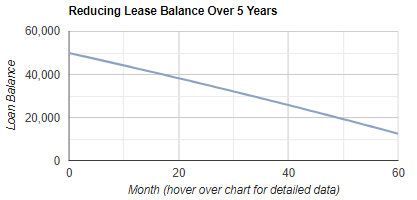
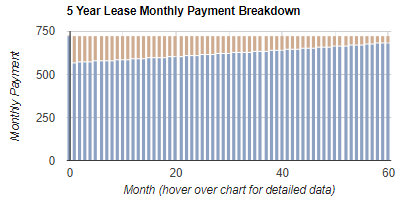
The following amortisation graphs detail month-by-month data on the progress of the proposed loan. The first chart below examines the reducing loan balance over the course of the finance contract term. The second graph illustrates the portion of each monthly repayment allocated to payment of interest vs principal reduction.
How to use our Truck Lease Finance Repayment Calculator
Our Truck Lease Finance Repayment Calculator helps Australian businesses estimate truck lease repayments before speaking with a lender. By modelling purchase price, interest rate, term and a residual or balloon payment, you can compare options, stress-test cash flow, and choose a structure that suits your operational needs and end-of-term plans (keep, refinance, trade, or pay out).
Why it matters: Truck lease repayments can look affordable while still carrying a large end payment. Adding a residual or balloon value may reduce monthly repayments, but it can increase total interest and leave a sizeable amount due at the end of the term. The calculator makes that trade-off clear.
How to complete the form for the best result
1. Purchase Price: Enter the truck’s purchase price as a whole number (no decimals, commas or symbols). Where relevant, consider whether you want to include on-road and other costs such as stamp duty, registration, insurance and tax-related amounts in your finance estimate (only include costs you expect to fund).
2. Balloon or Residual Value: Choose the residual as a percentage of the purchase price. A higher percentage generally lowers ongoing repayments but increases what you will owe at the end of the lease. Select a level that matches your expected end-of-term strategy and business cash reserves.
3. Term of Loan: Select the number of years you want to repay over. Longer terms typically reduce periodic repayments but can increase the total cost over time.
4. Interest Rate: Select an annual interest rate for the simulation. The listed rates are indicative only; your actual rate may differ based on lender policy and your circumstances. .
5. Calculate: Click calculate to generate the estimate and charts.
How to interpret the results
Review the estimated repayment amount alongside the amortisation charts showing the reducing balance over time and the split between interest and principal across the term. Use these outputs to compare scenarios, for example changing residual percentage or term, and to plan for the end-of-term residual payment.
ASIC compliance and important notes: This calculator provides general information and estimates only. It does not consider your objectives, financial situation or needs and is not financial or credit advice. Results may exclude fees, lender charges, taxes and timing assumptions. Consider seeking professional advice and obtaining a formal quote before making a decision.
A recent Australian Financial Complaints Authority decision involving a vandalised Hino truck is a useful reminder that disclosure disputes in commercial motor insurance turn on evidence, not assumptions. Reported by insuranceNEWS.com.au on 15 October 2026, the matter ended with Suncorp being ordered to reinstate the policy and reassess the claim after AFCA found the insurer had not proved that undisclosed driving history would have justified refusing the risk. - read more
Recent transport industry reporting has again highlighted growing interest in Performance Based Standards vehicles and other high-productivity truck combinations across Australia. For operators, the attraction is clear: fewer trips, better payload efficiency and stronger productivity on approved routes. For insurers, however, the shift is not simply a matter of adding another truck to the schedule. PBS combinations can alter exposure across vehicle value, route compliance, load responsibility, driver capability and recovery after an incident. - read more
Recent transport and insurance industry attention on lithium-ion battery safety is a timely warning for Australian truck operators. The issue is no longer limited to consumer products catching fire in homes or warehouses. Batteries now move through freight networks in tools, scooters, e-bikes, electronics, spare parts and energy storage equipment, and that creates a different risk profile for carriers, depots and subcontracted linehaul work. - read more
Recent fleet and transport industry coverage has again highlighted faster movement toward battery-electric and lower-emissions heavy vehicles in Australia, with truck makers, councils, logistics operators and specialist fleets moving beyond short demonstration runs. For truck operators, the insurance question is not simply whether electric trucks are better or worse than diesel. The practical issue is whether the policy reflects a different asset profile, different repair pathway and different downtime risk. - read more
As a proud truck owner, you understand that your vehicle is more than just a means of transportation; it's a vital part of your livelihood. With the unique insurance needs specific to your industry, ensuring that your truck is well-maintained can have a substantial impact on your insurance costs. - read more
Welcome to our comprehensive guide on navigating the insurance claims process as a truck owner in Australia. We understand that owning and operating a truck comes with unique challenges, and managing insurance claims effectively is one of them. This article aims to equip you with essential tips and knowledge to ease the claims process, potentially saving you time and money. - read more
Insurance is a critical aspect of owning and operating a truck in Australia. Navigating through the complex terms and conditions in insurance policies can be daunting, yet understanding this jargon is crucial. - read more
Flatbed truck insurance is a specialized type of coverage designed specifically for flatbed trucks. These commercial vehicles, known for their open-top design and versatility, are often used to transport large and bulky goods that can't be easily carried by conventional enclosed trucks. This form of insurance covers the unique risks associated with operating such vehicles, ensuring that both the truck and its cargo are protected from potential damage or liability. - read more
Knowledgebase
Waiting Period: The time period that must pass after filing a claim before the insurance coverage becomes effective or benefits are paid.